


Industrial Marking Machines for Parts, Products & Surface Processing
Compare laser marking, dot peen, laser cleaning and 3D crystal engraving in one place.
Start with your material, required result, part size and production method.
Choose the Marking Technology Before the Machine Model
HT Marker supplies four equipment families for different jobs: laser marking for fine codes, text and graphics; dot peen for permanent indented marks on industrial parts; pulsed laser cleaning for rust, paint and oxide removal; and 3D crystal engraving for subsurface images inside optical crystal.
The correct starting point is the workpiece—not the lowest price or highest wattage. Compare material, desired mark or cleaning result, required depth, marking area, cycle time, utilities and whether the part is fixed, portable or moving on a line.


Which Industrial Marking Machine Fits Your Job?
Use the table as a practical first filter, then confirm the exact model against your part and target result.
The ranges below come from current HT Marker reference models. They are useful for shortlisting, while final depth, contrast and processing speed still depend on material grade, surface condition, artwork, field size and parameter setup.
| Workpiece / task | Recommended technology | Useful HT Marker reference data | What to confirm before ordering |
|---|---|---|---|
| Steel, stainless, aluminum and industrial plastics Fine text, logos, serial numbers, QR/Data Matrix or controlled engraving | Fiber or MOPA laser View fiber laser machines | 20W–60W current catalog models, with 100W+ configurations available for higher throughput or deeper work. HS-FL30 reference: 1064±10 nm, ≤7,000 mm/s, up to 0.2 mm depth on suitable material; selected sources carry a 50,000-hour-class reference. | Required depth or contrast, material grade, 2D-code readability, field size, enclosure and extraction. |
| Chassis, pipes, castings, structural parts and tags Permanent indented characters or codes | Dot peen View dot peen machines | Confirmed current HT Marker models span 0.05–1.0 mm stated dot-peen depth, depending on model, material hardness and setup. Pneumatic systems favor speed and strong impact; electric or battery models avoid an air compressor and improve portability. | Hardness, target depth, post-mark coating, part curvature, access space, air supply and portable vs. benchtop use. |
| Wood, leather, paper, coated surfaces and many non-metals Fast galvo marking or shallow engraving | CO₂ galvo laser View CO₂ laser machines | HS-CL40 reference: 40W, 10.55–10.63 μm, ≤9,000 mm/s, 0.1 mm minimum line and up to 0.2 mm depth on suitable material. | Exact substrate, coating, desired color/depth, field size and whether cutting is required—galvo marking and flatbed cutting are different jobs. |
| Heat-sensitive plastics, glass and precision components Fine, low-heat-affected marking | 355 nm UV laser View UV laser machines | 5W and 10W current models. HS-UV05 reference: 110×110 mm standard field and ≤7,500 mm/s; HS-UV10 reference: 0.01 mm minimum line and 0.2 mm minimum character. | Plastic formulation or glass type, required contrast, cosmetic standard, cycle time and cooling configuration. |
| Rust, oxide, paint or process residue on metal Surface cleaning with limited mechanical contact | Pulsed laser cleaning View cleaning machines | 200W and 300W references use adjustable pulse widths (200W: 10–500 ns; 300W: 20–500 ns) and a 0–100 mm adjustable scan width. | Contaminant type/thickness, base material, acceptable surface change, area per shift, extraction and site power. |
| Optical crystal or glass blocks 2D/3D subsurface portraits, text and gifts | 3D crystal laser View crystal engraving machines | HS-GL20P: 355 nm UV, 70×70×50 mm reference engraving volume; HS-GL05: 5W 532 nm green source. Both list a 20,000-hour-class source reference. | Blank material quality, maximum blank size, target engraving volume, point density and 2D-to-3D workflow. |
Need Help Narrowing the Options?
See the Technologies in Real Applications
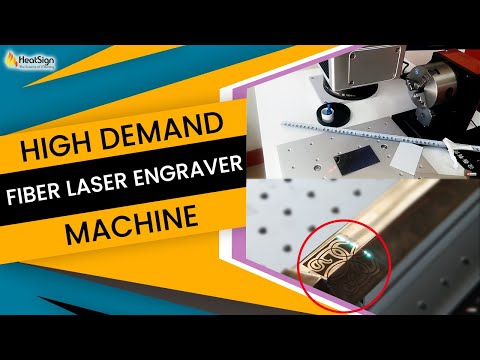
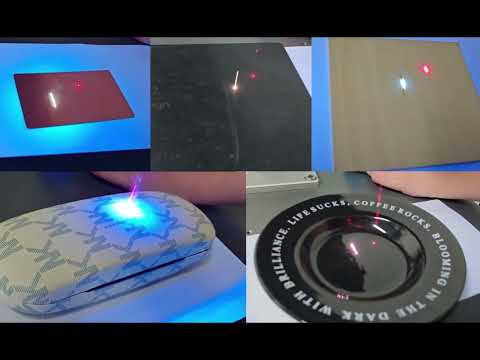
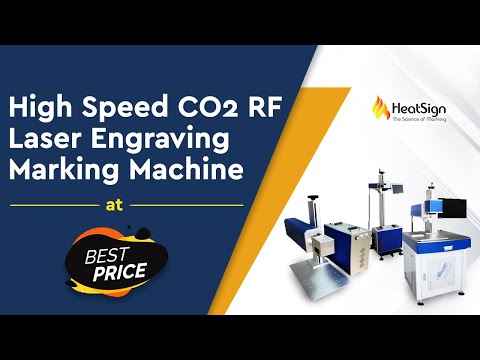
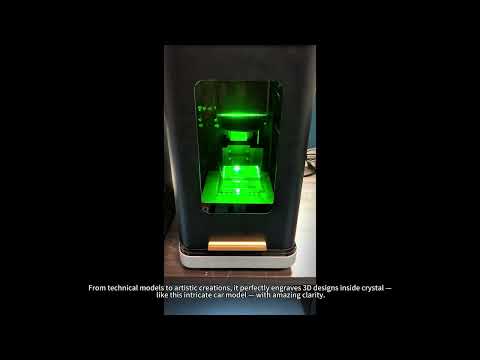
Use these product-family demonstrations to compare marking appearance, part handling and workflow before opening a specific machine page.
What HT Marker Helps You Confirm Before Purchase
Technology selection, model-level parameters, accessories, process checks and international delivery options.
Industrial marking equipment should be selected around the part and production task. HT Marker can compare fiber, MOPA, UV, CO₂, dot peen, laser cleaning and crystal engraving options, then narrow the configuration by material, mark depth or contrast, field size, portability, cycle time, safety enclosure and supporting accessories. The quoted specification and order documents remain the final basis for the supplied machine.
Application-First Technology Selection
We compare the required result before recommending a machine family. A deep chassis mark, a high-contrast Data Matrix code, fine marking on plastic and rust removal are different processes and should not be forced onto one technology.
Model-Level Parameters, Not Generic Claims
Recommendations can be checked against model data such as laser wavelength and power, marking field, stated speed, dot-peen depth range, pulse width, cooling method and required utilities.
Configuration and Pre-Shipment Checks
Available checks depend on the model and order, and can include configuration confirmation, marking or cleaning result review, accessory matching, basic operation checks and pre-shipment photo or video records.
Accessories and International Delivery
Rotary fixtures, lenses, extraction, enclosures, stands and other accessories can be quoted with the machine. Express, air and sea delivery options are available; DAP is common, while DDP is quoted only where the destination and route support it.
Industrial Marking Machine FAQs
1. How do I choose between Fiber, CO2, UV, and Dot Peen machines?
Start with the required result. Fiber or MOPA laser is the usual choice for fine, fast marks on metals and many industrial plastics. Dot peen is better when a true indentation is required on metal parts. CO₂ fits many organic and coated non-metals. UV at 355 nm is preferred for fine, low-heat-affected marking on suitable plastics, glass and precision parts. Laser cleaning is a surface-removal process, while crystal machines create subsurface images inside optical crystal.
For a useful recommendation, provide material grade, part size, marking area, desired depth or contrast, code type, target cycle time and whether the machine must be portable or integrated.
2. Can you customize the machine or source accessories for me?
Yes, within the available platform and safety limits. Common options include laser source and power, marking lens and field size, rotary fixture, Z-axis, enclosure, extraction, conveyor interface and selected software or controller functions. The quotation should list the exact source, scan head, lens, controller, accessories and utilities so the configuration is clear before payment.
3. Do you offer free sample testing?
Yes. Free Sample Testing is available when the buying decision depends on seeing the mark or cleaned surface on a real part. For the first recommendation, send the material grade, dimensions, target result, expected quantity and close-up photos or video; overseas customers often do not need to ship a sample at this stage. If a physical trial is useful—for example to approve a difficult plastic, a specified depth or a scan-grade code—contact us to agree the test scope, sample shipping and return arrangements before sending the part.
4. How do you handle shipping and customs (DDP/DAP)?
International delivery is available by express, air or sea, depending on machine size and destination.
- DAP: a common option where HT Marker arranges transport to the named place and the buyer handles import clearance, duties and local taxes.
- DDP: may be quoted for supported countries and routes after the forwarder confirms feasibility and cost.
The final quotation should state the Incoterm, destination, included freight, customs responsibility and any local charges.
5. What happens if the machine needs repair? (Warranty & Support)
HT Marker provides a one-year warranty for covered key components, lifetime technical support and remote diagnostics within 24 hours. Start a service request with the model/serial number, a photo or short video of the fault, and any error message. The team can check settings, optics, stylus, power or controller issues remotely and arrange eligible replacement parts under the order’s warranty terms. Post-warranty guidance continues; replacement parts, freight or on-site service may be chargeable. The quotation identifies the exact coverage for the configured machine.
6.Is the software compatible with my design files?
Yes for common marking jobs, but the file path depends on the machine family. Listed fiber systems use Windows-based EZCAD 2 or EZCAD 3 according to controller; text, serial numbers, logos and QR/Data Matrix codes are normal workflows. Dot peen systems may use an integrated touchscreen or PC software instead. If your production file is DXF, AI, SVG, BMP, CSV or another format, send one example before ordering: the controller, import method, fonts, variable-data rules and any PLC/database link can then be checked for the selected model.